Drowning remains the leading cause of death among children in Vietnam, with an estimated 1,800 young lives lost in 2022. Climate change has intensified this crisis—rising temperatures bring more extreme weather and seasonal flooding across Vietnam’s dense network of rivers, canals and lakes, multiplying risks for vulnerable children.
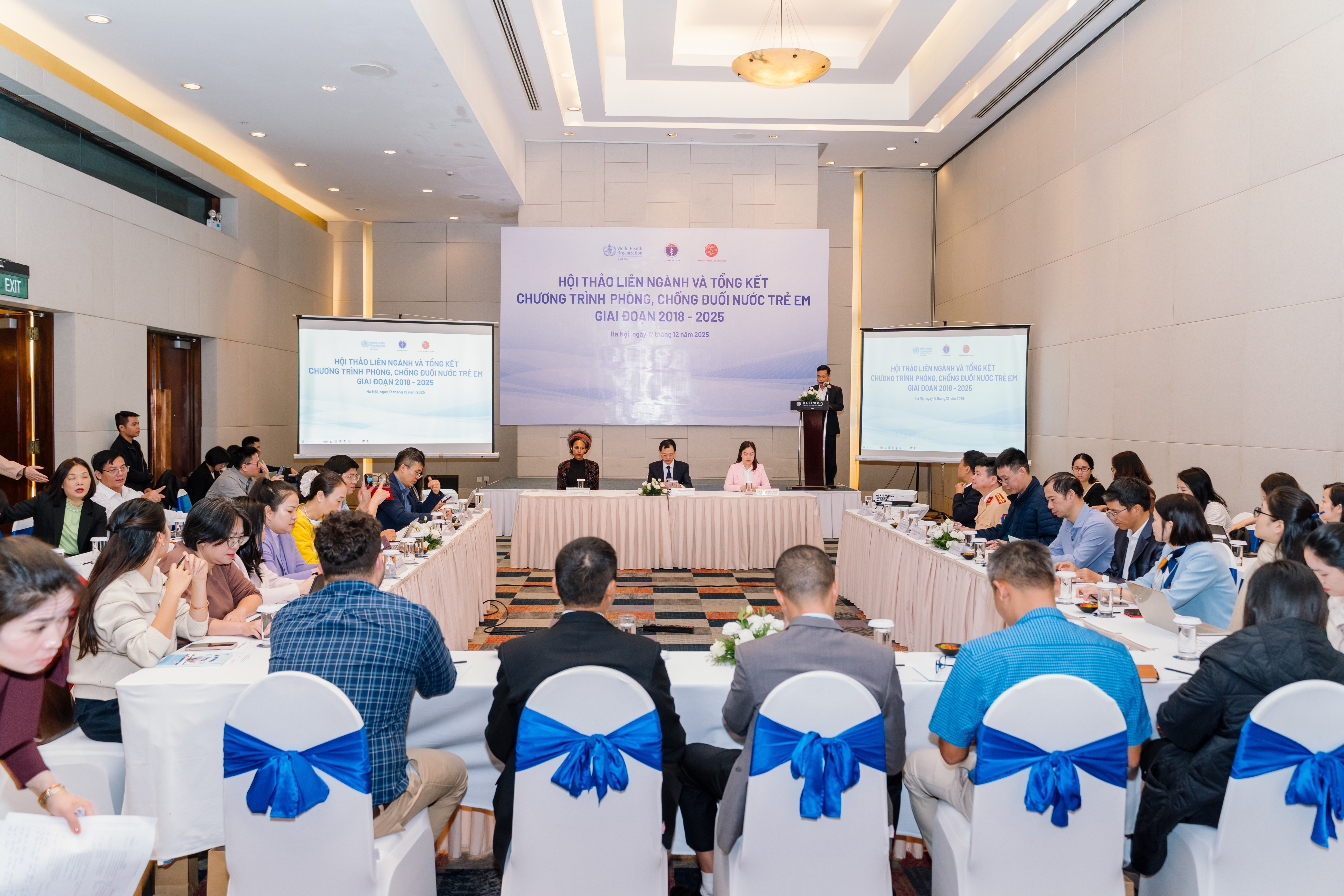
To review child drowning prevention progress and consolidate lessons from the 2018-2025 program, the Administration of Maternal and Children’s Affairs - Ministry of Health, in partnership with Global Health Advocacy Incubator (GHAI), convened an intersectoral workshop on child drowning prevention. The workshop highlighted significant achievements across nine ministries and the urgent need to institutionalize and expand proven interventions nationwide.
Opening the workshop, Deputy Minister of Health Professor Nguyen Tri Thuc congratulated all partners, noting these results stem from sustained intersectoral collaboration across ministries, provincial authorities, schools and communities, reinforced by strong public communication and political commitment.
Proven Results Drive National Momentum
The program, funded by Bloomberg Philanthropies, has delivered measurable, evidence-based impact. More than 65,000 children received survival swimming instruction, over 1,500 physical education teachers were certified to deliver safe-swimming lessons, and over 30,000 parents, caregivers and preschool teachers were trained in prevention strategies.
The outcomes speak for themselves: in intervention localities, child drowning rates declined by 16 percent compared with pre-project levels. Independent evaluations confirmed the program is both highly effective and cost-efficient, directly supporting Vietnam’s national target under Decision 1248/QĐ-TTg to reduce child drowning deaths by 20 percent by 2030. Learnings from survival swimming program model, the Ministry of Education and Training highlighted significant policy achievements, including the Survival Swimming Curriculum and Instructional Materials for Students, followed by Prime Minister Decision No. 1717/QD-TTg approving the Program on Strengthening Education on Knowledge and Skills for Drowning Prevention for Students for the 2025–2035 period.
The economic consequences of child drowning extend far beyond immediate healthcare costs, imposing long-term financial and psychological burdens on families and society. Vietnam study highlights substantial costs related to medical care, funeral expenses, lost productivity and severe emotional distress among parents and caregivers. According to Dr. Nguyen Ngoc Anh from the Development and Policies Research Center, every US$1 invested in survival swimming training can yield up to US$20 in benefits, while the cost to train one child is approximately US$ 30 compared with an annual child drowning burden exceeding 15 trillion VND.
Climate Change Demands Integrated Response
The World Health Organization Vietnam and government ministries underscored that climate change has increased drowning risks, particularly for vulnerable children in rural and coastal areas. They stressed the importance of incorporating drowning prevention into climate resilience strategies, including resilient infrastructure, early warning systems and community preparedness.
Looking Ahead
As the program transfers to the Ministry of Health and local authorities in 2026, participants emphasized priorities for capacity building, governance and expansion of effective models. Drowning can occur in moments, but prevention requires sustained commitment.
With continued collaboration, strategic investment and integration into national development frameworks, Vietnam has the tools and momentum to ensure that every child grows up safe and healthy around water.