


June 9, 2026
February 24 marks four years since the start of the war in Ukraine. Even amid ongoing conflict, daily life continues. Children go to school. People commute to work. Families travel to buy groceries and stay connected to those they love. The roads remain a lifeline and making them safer is not a secondary concern. It is part of protecting lives. And, a few seconds can be the difference between getting home safely and never arriving at all.
On Ukraine’s roads, everyday decisions like pressing the accelerator a little harder or buying a cheaper helmet that looks protective, can carry irreversible consequences. Yet speeding and substandard helmets are often overlooked, in part because strong, enforced policies to address them are lacking. When the rules are weak, or poorly implemented, dangerous behavior becomes normalized. During fall 2025, two Ukrainian civil society organizations set out to change that by turning road safety from a technical policy debate into a public conversation people could not ignore.
With support from the Global Health Advocacy Incubator (GHAI), these organizations launched two national media campaigns that reached millions, reshaped public understanding around road safety and helped build momentum for evidence-based policy change. One focused on speeding. The other tackled motorcycle helmet safety. Together, they demonstrated how strategic communications can transform data into urgency and awareness into action.
Slowing down to save lives
Speeding is one of the leading causes of road deaths, yet it is often treated as a minor offense. The Center for Democracy and Rule of Law (CEDEM) set out to change that perception while building support for Draft Law No. 13314, which would reduce Ukraine’s non-penalized speeding threshold from +20km/h to +10km/h and introduce more proportionate fines.
Rather than leading with legal jargon, CEDEM anchored its campaign in a simple truth: “Better late than never.” This message reframed speeding as a choice with real consequences, not just a question of enforcement.
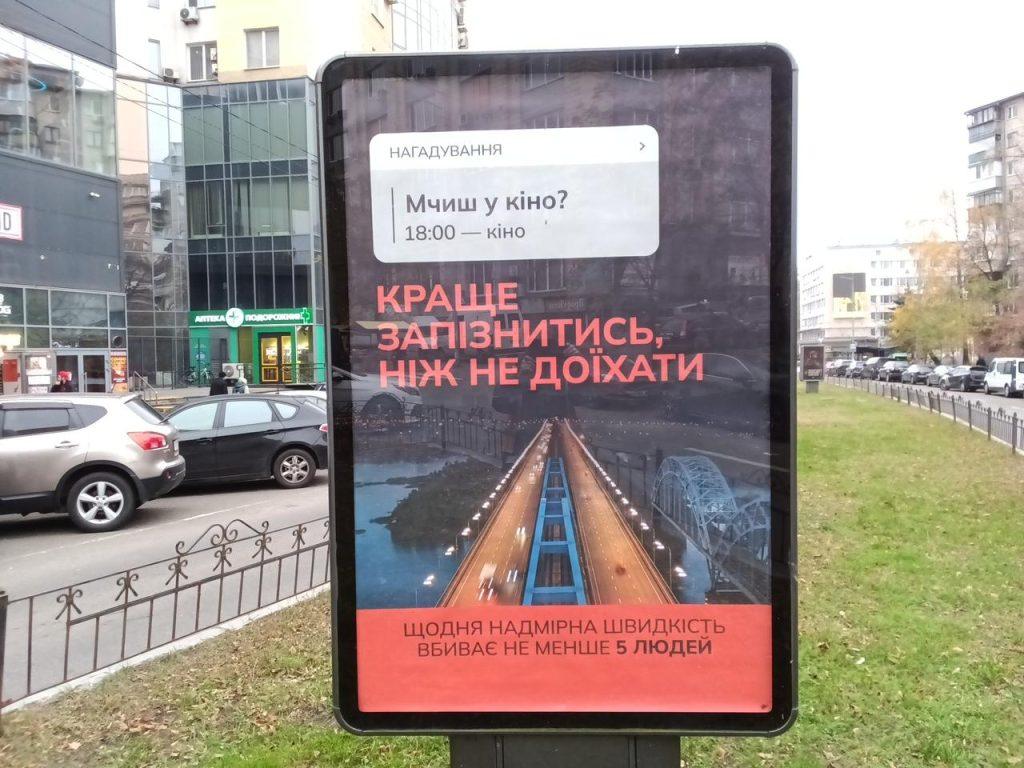
The campaign reached people where it mattered most—high-traffic corridors and busy urban centers—through large-format billboards and street-level advertising displays across Kyiv and six additional cities. A coordinated wave of social media engagement and media coverage in the lead-up to Ukraine’s Road Safety Week amplified public attention and built momentum. The official launch, marked by a press briefing attended by Members of Parliament and government representatives, signaled strong institutional interest. Strategic partnerships with trusted influencers further expanded the campaign’s reach and strengthened its credibility.
The impact was powerful. Dozens of media outlets highlighted the campaign and 36 governmental institutions shared the campaign’s messages or visuals on their official social media platforms. This amplification helped with legitimacy and shifted social norms: speeding was no longer just a bad habit; it was a public safety issue demanding action.
Helmets that Actually Protect
The second campaign addressed a quieter but equally dangerous problem: unsafe motorcycle and moped helmets. In Ukraine, many riders wear helmets that offer little real protection, and most consumers cannot easily tell certified equipment from low-quality imitations.
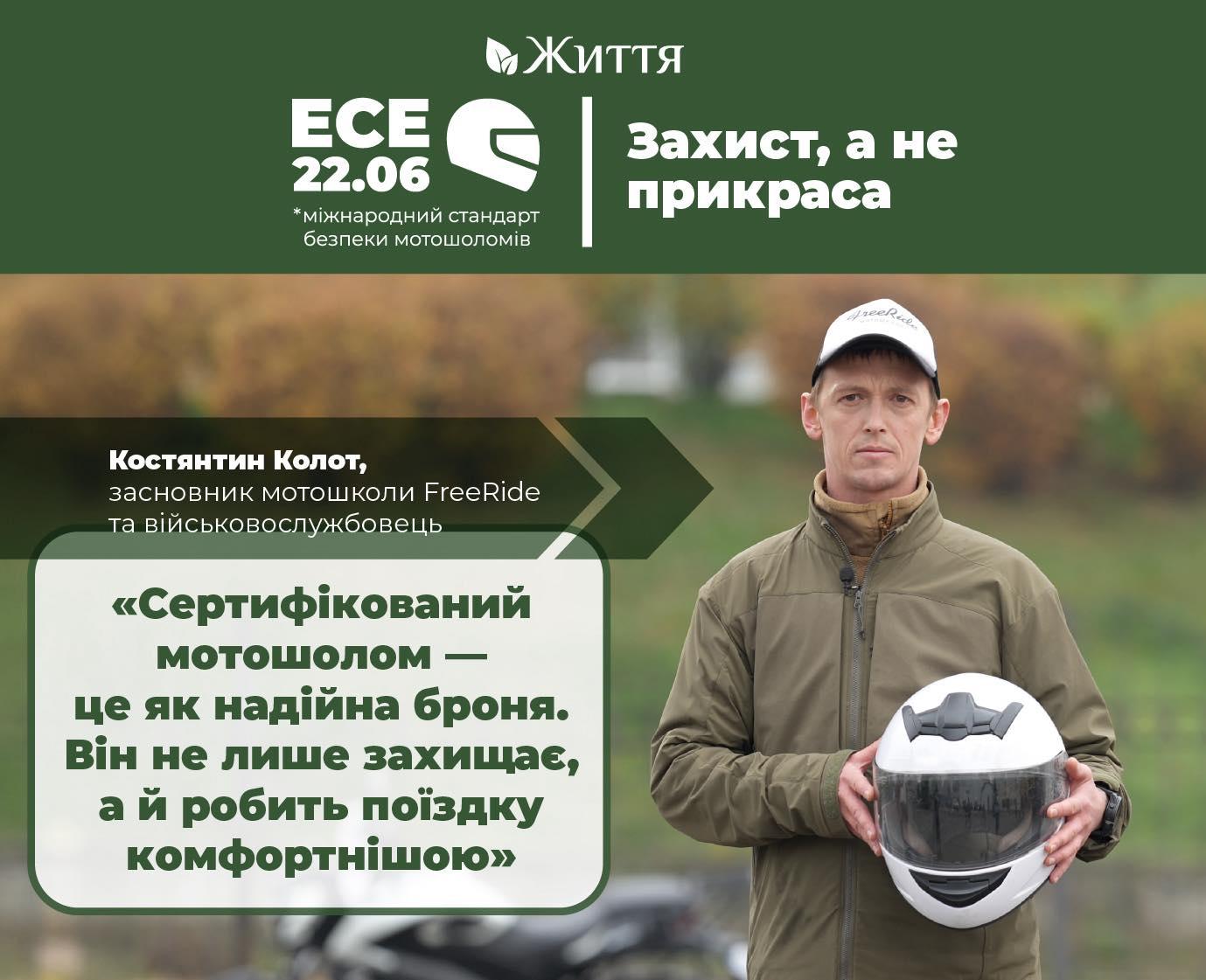
Led by Advocacy Center LIFE, the campaign, “Protection, not decoration,” delivered a clear message: wearing a helmet is not enough if it cannot protect you in a real crash. The goal was to build public support for mandatory national helmet safety standards aligned with the uniform international standards for protective helmets and visors for motorcycle and moped users. (UNECE ECE 22.06)
To reach riders where they are, the campaign elevated trusted voices from the motorcycle community and paired that with sharp, platform-ready videos designed for short attention spans. Smart distribution strategies pushed the content far beyond paid ads.
The campaign delivered high online engagement with nearly one million YouTube views, close to 1.4 million impressions and tens of thousands of clicks. More importantly, the campaign helped make helmet certification a mainstream safety expectation, not a niche technical issue.
As public awareness grew, policy progress followed. In November 2025, a draft Cabinet of Ministers Resolution approving the new technical regulation on helmet safety was submitted for consideration.
The Impact Behind the Messages
Together, these two campaigns demonstrate how strategic public communications can serve as powerful leverage in road safety advocacy. By translating technical reforms into clear, relatable messages, they expanded public awareness, strengthened the credibility of local advocates and kept life-saving policies visible in the national conversation.
For GHAI, they reflect a broader strategy: empowering local partners to translate evidence into human stories, mobilize trusted messengers and sustain attention on reforms—even in complex and challenging contexts.
The Road Ahead
These campaigns have done more than spark attention—they have shifted expectations. Millions of people have been reached, conversations have changed and decision-makers are feeling the pressure to act. Now the task is to convert that momentum into lasting protection on the streets.
The next chapter is about locking in impact: passing and enforcing safer speed rules, adopting helmet standards that truly protect riders and making safety the norm, not the exception—on every journey.
Every trip should end the same way: with someone getting home safely.


