
80%
Reduction in overdose deaths when people have access to FDA-approved medications for opioid use disorder.

Every overdose death is preventable.
In the United States, overdose remains one of the leading causes of preventable death. By the end of 2024, roughly 80,000 people lost their lives. After years of rising deaths, the nation is seeing steady real progress. Overdose deaths have fallen by more than 25 percent in the past year.
This progress reflects the work of communities advocates and policymakers who fought for evidence-based treatment, harm reduction strategies and policies that expand access to care.
We replace stigma with science and remove barriers to proven treatment. Through federal policy change and public awareness, we help expand access to affordable, evidence-based addiction treatment and overdose prevention strategies. Our goal is not only fewer deaths, but a fairer and more humane care system for every person affected by addiction.
Supported by Bloomberg Philanthropies, the Overdose Prevention Initiative advances a national movement grounded in evidence and compassion because every life saved strengthens the communities we share.
80%
Reduction in overdose deaths when people have access to FDA-approved medications for opioid use disorder.
69,172
Lives lost to drug overdose in the 12 months ending August 2025 — a 21% drop from the year before.
60%
Overdose deaths that could be prevented through timely intervention or earlier access to care.
$7
Return in criminal justice savings for every $1 invested in substance use disorder treatment.
The overdose crisis continues to evolve and progress depends on sustained national leadership. Without consistent federal investment, evidence informed strategies and strong systems of care, overdose deaths and disparities will persist.
Communities need reliable access to treatment, modernized harm reduction services and prevention strategies that meet people where they are. Federal policy plays a central role in making these tools available in every state.
Our Approach
Practical, coordinated federal action can end preventable overdose deaths. The Overdose Prevention Initiative advances policies that strengthen addiction treatment systems, eliminate barriers to care and reduce disparities.
We turn research into action by championing policies that expand access to medications for opioid use disorder, support harm reduction strategies and promote recovery-oriented systems of care. Our team works closely with Congress to ensure decisionmakers understand the realities of the overdose crisis and the policies that work.



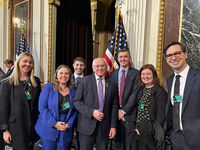
Each year, we partner with Congressional offices to host the Congressional Naloxone Training, offering hands-on instruction to lawmakers and staff on how to recognize and respond to an overdose. We also coordinate briefings, share data and insights and bring local experts to the table to inform national policy decisions.

Our coalition led advocacy helped pass the Mainstreaming Addiction Treatment (MAT) Act, passed in December 2022, eliminating outdated barriers to buprenorphine and expanding the nation’s treatment capacity.
We continue to lead national advocacy for the Reentry Act and the Due Process Continuity of Care Act, which would restore Medicaid coverage for people entering and leaving incarceration. To demonstrate the impact of these reforms, we partnered with a Virginia detention center to show Members of Congress how access to addiction medications during incarceration saves lives and improves reentry outcomes.
Immediate access to evidence-based treatment saves lives. We support policies that expand access to medications for opioid use disorder including buprenorphine and methadone across primary care, telehealth, emergency departments and correctional settings.
We work to strengthen systems of care and expand peer support in hospitals, communities, and carceral facilities so that high quality treatment is the expectation, not the exception.
Medicaid and Access to Care
Medicaid is the nation’s largest payer of addiction treatment, supporting care for nearly two million people. Cuts to Medicaid threaten access to treatment for those most at risk.
Local action saves lives. Community-based organizations implement prevention and harm reduction programs that reduce deaths and support recovery.
Many of these organizations rely on federal funding created under the SUPPORT Act. Five years after its passage, annual overdose deaths fell nearly 24 percent, reflecting the impact of sustained federal investment.
SUPPORT Act Reauthorization
GHAI helped secure the 2025 reauthorization of the SUPPORT Act, renewing programs that fund:
Accurate, timely data guide effective overdose prevention. With a rapidly changing drug supply, strong public health surveillance allows states to detect new substances, identify emerging trends and deploy resources quickly.
Programs within HHS provide data that help states act fast and address behavioral health workforce shortages, which affect more than one third of the country.
Protecting Federal Surveillance Systems
GHAI calls for full restoration of federal funding for HHS overdose data programs. These systems give states the intelligence needed to protect communities.

The overdose crisis spans public health and public safety. Effective solutions require collaboration across sectors. Through nearly 160 partnerships nationwide, the Overdose Prevention Initiative brings together public health leaders, law enforcement, justice involved advocates, mental health and substance use organizations, and community-based programs.
We provide tailored advocacy support to help organizations contribute to national policy solutions. Whether joining a sign-on letter, co-hosting an event, or strengthening advocacy skills, partners play a vital role in preventing overdose and supporting recovery.
Advocacy 101 Training
Practical instruction on engaging policymakers, communicating evidence, and shaping policy.
Hill Days
Opportunities for advocates to meet with Members of Congress, share local experience, and advance key policy goals.
Sign On Letters and Policy Statements
Coordinated advocacy efforts that demonstrate collective support and highlight urgent public health needs.
Events and Briefings
National convenings and targeted discussions that connect leaders and accelerate progress.
o help advocates track the funding behind overdose prevention, we developed a FY 2027 Appropriations Crosswalk. It shows how the FY 2027 President’s Budget Request compares with current federal funding for key substance use disorder and overdose prevention programs, including proposed reductions, restructures and consolidations that could affect treatment, prevention, recovery supports, health surveillance and community-based response. Use it to connect budget decisions to real service impact, then pair it with our appropriations webinar on HATCH for a step by step walk through, plus our U.S. Federal Advocacy Action Guide to strengthen your federal advocacy campaigns.

Associate Vice President

Strategic Partnerships Program Manager

Associate Director

Associate Director

Research Manager

Policy Brief
Fact Sheet
Fact Sheet
Explainer
Explainer
Fact Sheet
External Web Page
External Web Page
External Web Page
External Web Page

The Mainstreaming Addiction Treatment Act (MAT Act) was signed into law in the final days of December 2022, eliminating a key barrier to access of a lifesaving medication for the more than 100,000 people dying of overdose per year.
May 20, 2026
May 7, 2026
May 6, 2026


