Théodora, nine years old and in her final year of primary school in Yopougon barely flinched when the needle went in. At Adjamé General Hospital, she received her first HPV vaccine dose a shield against cervical cancer that will protect her for life. Since Côte d'Ivoire integrated the vaccine into its routine immunization program in November 2019, it has been free.
But most girls her age remain unprotected.
Despite the vaccine costing families nothing, national coverage for the second dose reached just 27% in 2021, up from 8.51% the year before and far short of the 95% target. The problem is not supply, it is demand.
Herbert Aho knows this struggle well. As head of the vaccination program at FENOSCI, a national federation of health organizations, he works alongside health districts to change minds one community at a time. His team organizes group discussions, one-on-one conversations and participatory theatre to reach girls aged 9 to 18 and the adults who make decisions for them.
The obstacles run deep. Nearly 70% of adolescent girls have never heard of HPV. Many parents fear side effects. Others resist vaccinating young daughters against a sexually transmitted virus because the link to sexuality remains taboo. Education, Aho has found, unlocks acceptance.
"Protecting your daughter today means sparing her from cancer tomorrow," he tells families. "The vaccine is safe, free and effective."
Yet even if Aho and fellow community mobilizers succeed in building demand, the protection they are creating could collapse without stable funding.
For two decades, Gavi, the Vaccine Alliance, invested over $200 million in Côte d'Ivoire's immunization program, including support for HPV vaccine introduction through its co-financing model, which requires the countries it supports to contribute to the cost of supported vaccines. But that era is ending. The country aims to achieve full financial autonomy on vaccines by 2030 and Gavi's contribution will shrink. Continuing a long-standing upward trend, the government's share of co-financing is projected to increase by 54%, rising from $12 million in 2025 to an estimated $18.5 million in 2026.
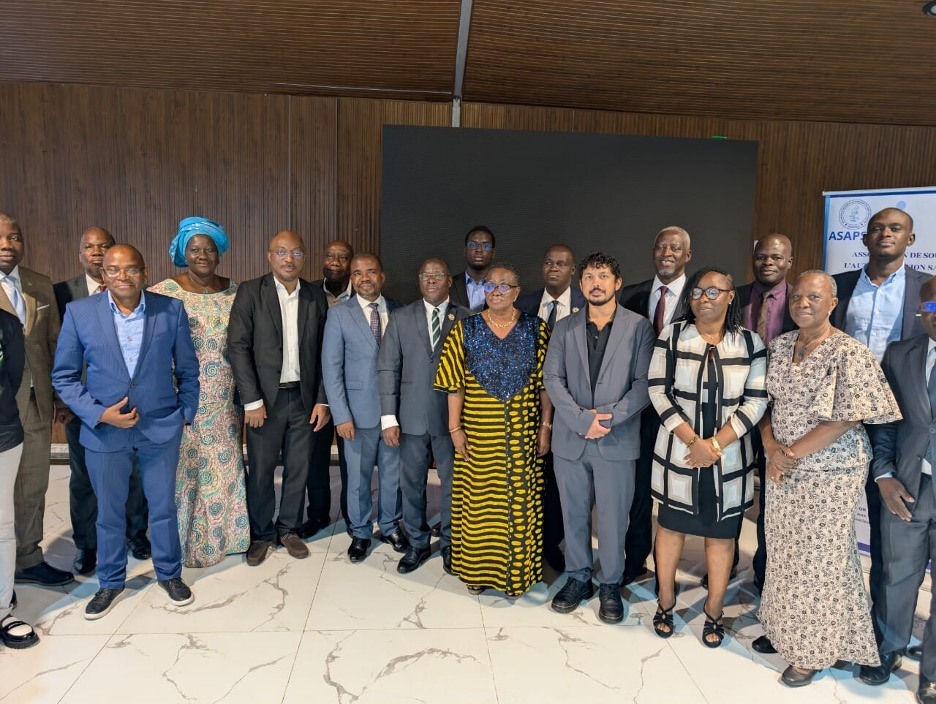
The Association de Soutien à l'Auto Promotion Sanitaire Urbaine (ASAPSU), a civil society organization focused on urban health, worked in partnership with the Global Health Advocacy Incubator in 2024 and 2025, to secure the financial foundation that make vaccines like Théodora's possible in Côte d’Ivoire. The ASAPSU team, under civil society leader—Solange Koné—mapped budget challenges, engaged Parliament and key ministries and rallied civil society, media and technical partners to ensure Côte d'Ivoire could sustain its immunization program independently.
The math favors prevention. Treating cervical cancer costs between 550,000 West Africa CFA Francs (about $985) and 3,000,000 West Africa CFA Francs (about $5,370), sums most Ivorian families cannot afford. Vaccination costs a fraction of that.
Théodora is now protected. But protection of other girls depends on community educators like Aho, advocates like Koné, parents willing to say yes and a government that commits the resources to keep vaccines flowing.
October 2025 brought to life “Octobre Rose” a series of events and screening days and the inauguration of a dedicated breast and cervical cancer screening unit at the Ministry of Women, Family and in Abidjan. That month-long spotlight didn’t end the work—it helped sustain momentum for prevention, including HPV vaccination.
It had already picked up steam dramatically in April 2025, when Côte d'Ivoire launched its largest HPV vaccination campaign to date. Over the course of just one week, from April 7 to 13, the campaign resulted in the vaccination of approximately three million girls aged 10 to 18, including those who had missed vaccination during the COVID-19 pandemic. Supported by Gavi, the Vaccine Alliance, the campaign represented a critical catch-up effort to close the gap between the country's current coverage and the 95% target.
The campaign's success in reaching girls is undeniable, but the deeper challenge persists— transforming one-time mobilization into lasting demand and ensuring that every eligible girl receives not just one dose but completes the full vaccination series.
FENOSCI and its member organizations, such as ASAPSU, still send community educators into schools, health centers and village gatherings across the country.
Their work aligns with a global push. January 2026 marked Cervical Cancer Awareness Month, and the World Health Organization reaffirmed its 90-70-90 elimination targets: 90% of girls vaccinated by age 15, 70% of women screened by ages 35 and 45, and 90% of those with precancer or cancer treated. Rwanda aims to meet these targets by 2027. Côte d'Ivoire, with its 27% second-dose coverage, still has a long way to go.
For every Théodora now protected, thousands of girls are still waiting to be found. Her protection won’t be complete until her second and final dose at the end of February 2026—and that simple truth captures the real challenge: not just reaching girls once, but returning for every girl, every time. This is why, through locally led advocacy, our engagement with actors on both the demand and supply side of live-saving vaccines, such as HPV, must continue.
Past Tinamoi and through Mikuu, Sheila Chepkoi walks with her youngest child on her back and worry in her chest. From her home in Baringo County, in Kenya's Rift Valley, the nearest health facility is hours away on foot, and she has no money for transport. She walks because she knows what a missed vaccine can cost her child.