A story of past crises, present stability and future resilience. How a frank dialogue in Nairobi, fueled by advocacy and political will, is building a system where every child has a shot at a healthy life.
It begins with a question that echoes with the weight of experience. During the vaccine stockout crisis of 2025, Kenyan Member of Parliament Dr. James Nyikal rose to ask his government ministers: when one caregiver has to cross a border to find a routine vaccine, how many more families are doing the same quietly and without options? That question, a glaring reminder of a recent past, hung in the air at the recent Kenya Vaccine Availability Workshop in Nairobi on February 5, 2026. But this time, it served not as a cry of despair, but as a benchmark for remarkable progress amid challenges.
For Dr. Margaret Lubaale, Executive Director of the Health NGOs Network (HENNET), the memory of that crisis is deeply personal. She shared the story of her sister-in-law in Uganda, whose baby died from measles, a disease long preventable by a simple shot. “That child should not have died,” Dr. Lubaale stated, her voice serving a quiet testament to the human cost of a system’s failure. It is a loss that fuels her work, a powerful reminder that behind every stockout statistic is a potential tragedy.
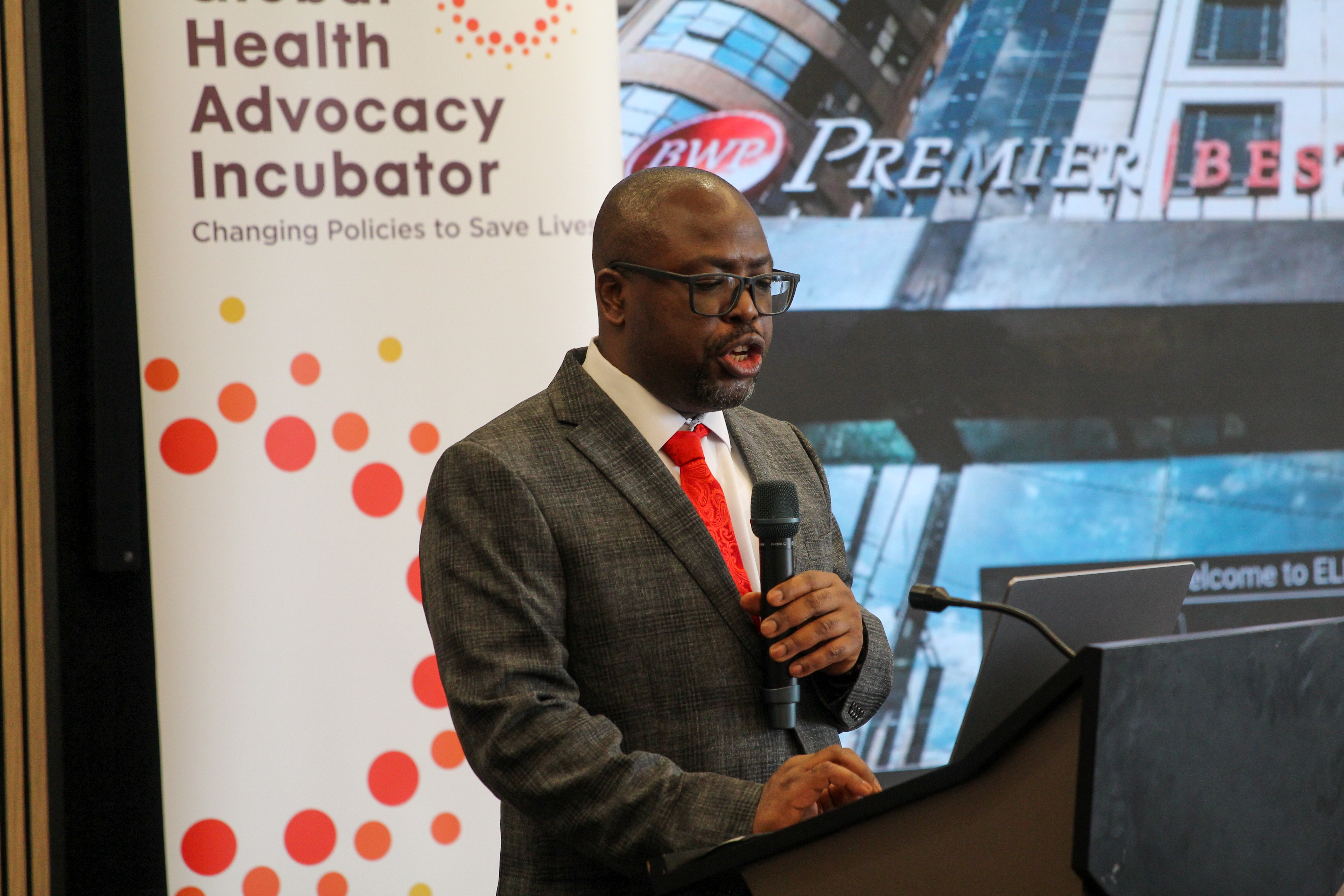
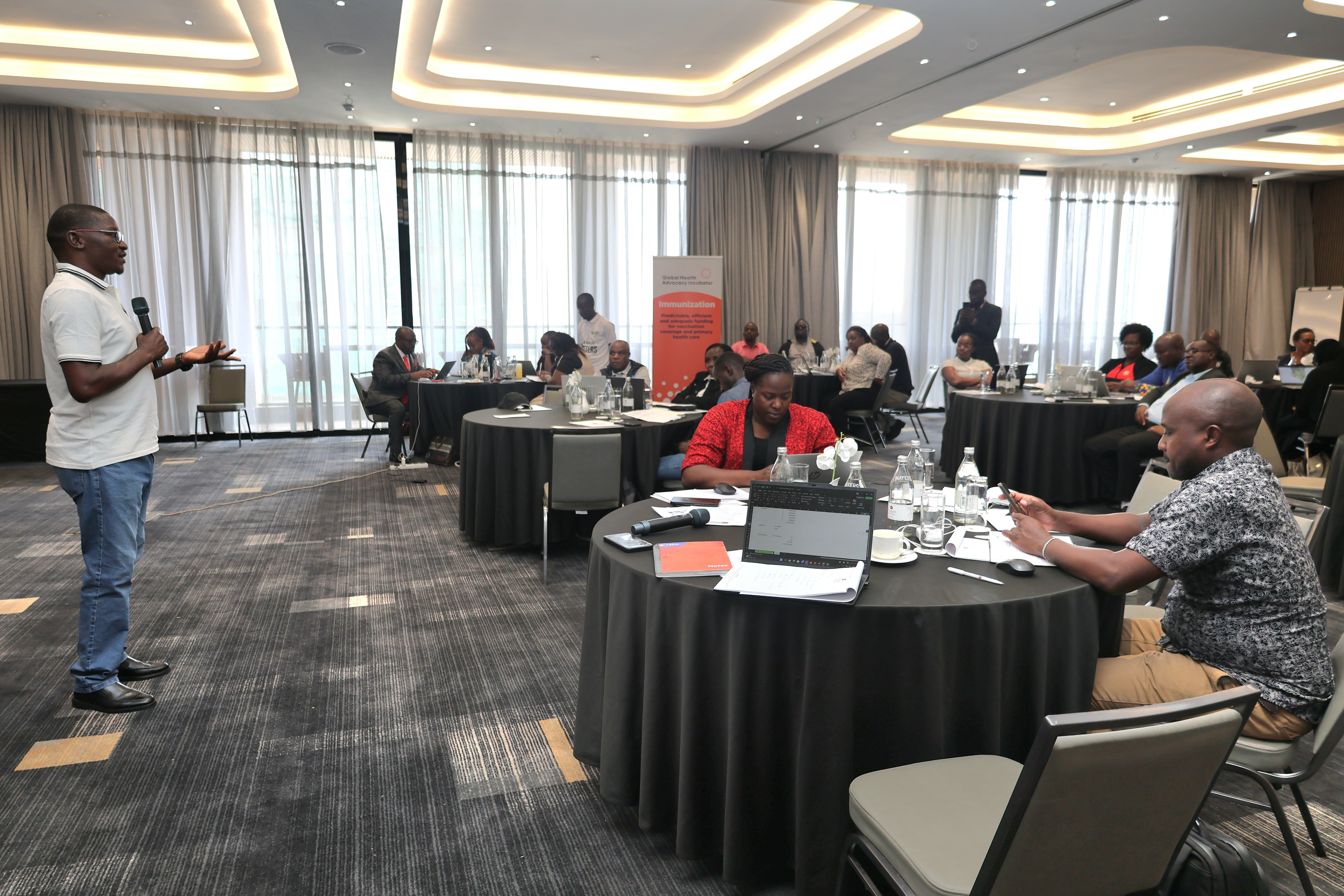
These stories, one of national concern and the other of personal heartbreak, framed a dialogue that was fundamentally different from those of previous years. Convened by the Global Health Advocacy Incubator (GHAI), HENNET and the Ministry of Health’s National Vaccines and Immunization Program (NVIP), the workshop was not about managing a crisis. It was about building the resilience to prevent its return.
A New Dawn for Immunization in Kenya
The atmosphere in 2026 is one of cautious optimism, a stark contrast to the scarcity of 2024 and 2025. The reason for this shift is not accidental. It is the direct result of relentless, coordinated advocacy led by civil society partners like HENNET, championed by dedicated parliamentarians and supported by GHAI. This coalition worked tirelessly to elevate immunization financing on the national agenda, ensuring it became a political priority.
The results are tangible. As Abel Akara Ticha, GHAI’s Associate Director of Communications, highlighted in his opening remarks, Kenya has already paid 62 percent of its Gavi co-financing obligation for the 2025/2026 financial year, with a disbursement of $7.29 million. This sends a powerful signal of national ownership and political will. Furthermore, a Parliamentary Caucus on Immunization is being established, giving vaccine financing an institutionalized home in the legislative government branch, thanks to the leadership of champions like Dr. Nyikal and Dr. Jackson Kosgei.
This progress is reflected in the national vaccine stores. While the logistics report for February 2026 showed the stock of some vaccines would not last up to three months, including for rotavirus and HPV, Dr. Fathiya Said Hammy, NVIP’s logistics lead, provided crucial context. Shipments for these vaccines are already on the way and scheduled to arrive well before stocks are depleted. Kenya, she assured the room, is not facing a stockout. The system is working.
Untangling the Million-Knot Problem
With the immediate crisis averted, the workshop provided a unique opportunity to dissect the system’s underlying complexities. Dr. Collins Tabu, Immunization Team Lead at UNICEF Kenya, delivered a staggering statistic: coordinating vaccines to reach one million children in Kenya involves 787 million potential transactions. This number powerfully illustrates the immense challenge of ensuring a seamless supply chain from the national store to a remote village clinic.
The county health managers, who navigate this complexity daily, brought the reality of the “last mile” into sharp focus. They spoke of forecasting gaps that fail to capture local needs, distribution bottlenecks through difficult terrain and the constant struggle for adequate funding. In Kisumu County, for instance, 58 facilities operate with only one staff member. Yet, even here, innovation thrives. Zipline drones now deliver vaccines to 65 remote facilities, demonstrating the power of technology to overcome geographical barriers.
The dialogue unearthed other bright spots. Laikipia County has established a dedicated KES 500,000 Kenya Shilling (about $3,875) budget line for immunization, a small but revolutionary step towards financial ownership at the county level. This move provides a blueprint for all 47 counties, demonstrating that local leadership can create pockets of resilience.
The Marathon Continues
The workshop was a forum for honest reflection and a platform for shared commitment. It moved the conversation from blame to collective problem-solving. As Akara Ticha noted, vaccine availability is fundamentally a public confidence issue. “When vaccines are consistently available, communities trust the health system,” he said. “When they are not, confidence is eroded.”
The ultimate measure of success remains the experience of the caregiver. Dr. Rose Jalang’o, head of NVIP, shared a story of a mother in Nyabondo, a rural settlement in Kisumu County walking five kilometers to a clinic, only to find the needed vaccine unavailable. Dr. Jalang’o noted that it should be the goal of every person at the workshop to ensure that the mother’s next journey, and the journey of millions like her, ends not in disappointment, but with the simple, life-saving protection of a vaccine for their child.
This workshop was not a declaration of victory. It was a recognition that the marathon continues. The advocacy that turned crisis into stability must now be sustained to build true resilience. The data, the stories and the shared commitments in Nairobi provide a powerful roadmap. They equip civil society and parliamentary champions with the evidence needed to ensure that the progress made is not just a temporary reprieve, but a permanent new reality for the children of Kenya.