Written by Abel Akara Ticha of GHAI with contributions from Mohamed Awuah of Health Alert Sierra Leone.
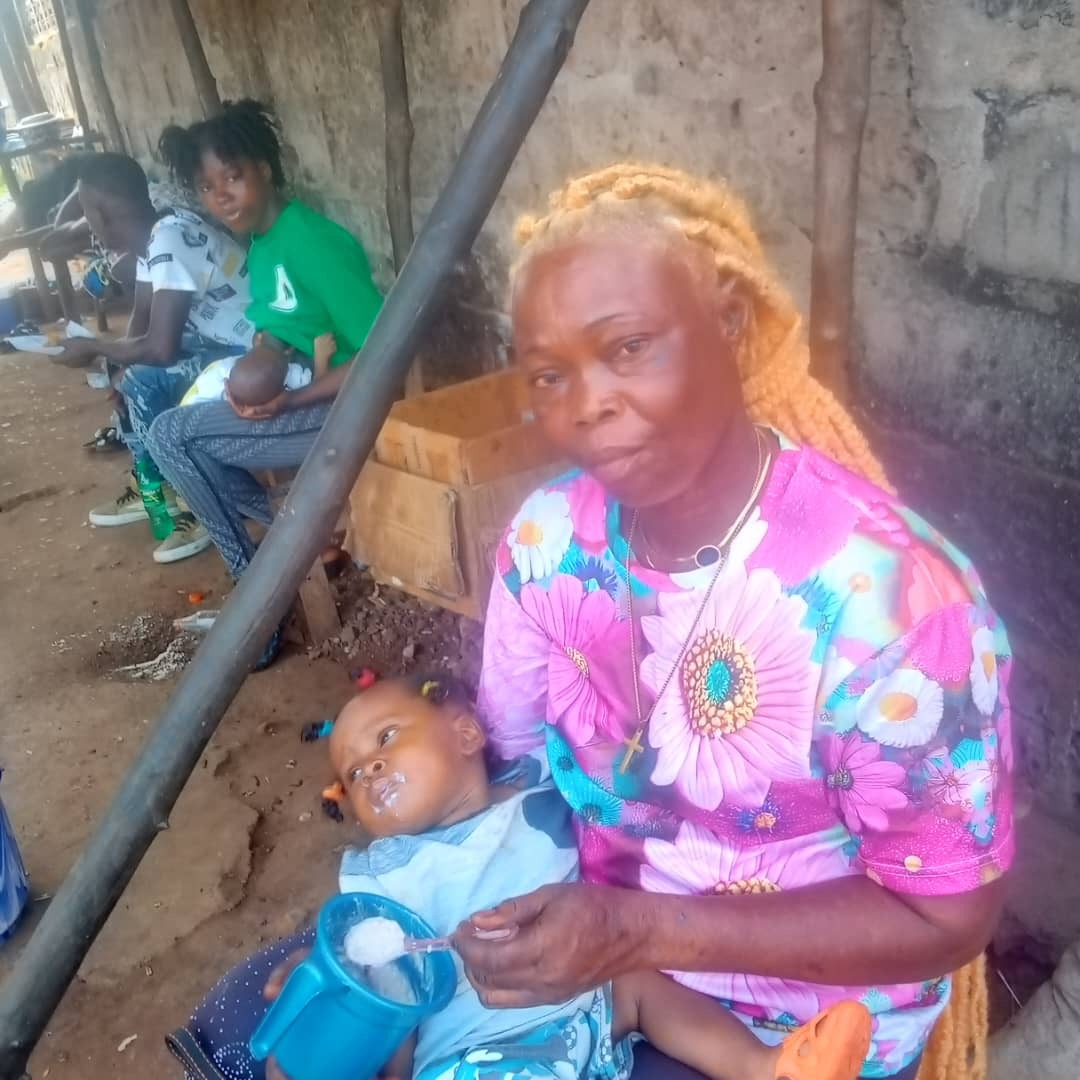
At dawn in Wellington market, eastern Freetown, Musu Kamara stacks tins of milk and bars of soap, eyes darting to the clock while her youngest, not yet five, clings to her wrapper. For years, the numbers that kept her awake were not sales tallies. They were the odds that a preventable disease might steal her child’s future. She remembers 2012, when cholera sickened more than 25,000 people, the measles flare-ups in 2018 that sent teams door to door in Kambia and Falaba and the 2020 detections of (circulating Vaccine-Derived Poliovirus type 2 (cVDPV2) that triggered additional nationwide polio campaigns.
“I was told that the government was doing its best to pay for vaccines for children in the country and felt really relieved,” she says. “I was having sleepless nights thinking if my children would be affected by polio or measles.”
Learning that the Government of Sierra Leone has made its 2025 Gavi co-financing payment, (its contribution to Gavi’s funding support for vaccines) eased Musu’s fears. “I am very happy and I hope the government will continue to purchase these vaccines, because this will help me, my children and the rest of my community,” she says. “Nobody pays for these vaccines; they are entirely free.”
From one mother’s anxiety to a system delivering
Sierra Leone’s Expanded Program on Immunization (EPI) delivers vaccines free in facilities across the country, with pneumococcal conjugate vaccine (PCV) in the schedule since 2011 with Gavi support. Coverage trends show a system that is strengthening but still climbing: the Bacille Calmette-Guérin (BCG) tuberculosis vaccine is near universal, the first dose of the measles vaccine protects more than 8 in 10 children, and coverage for the third dose of the diphtheria, tetanus, and pertussis vaccine (DTP3), also supported by Gavi, is rising. Each percentage point represents thousands of children better protected because vaccines are on the shelf when caregivers arrive.
The government's willingness to pay for co-financing signals progress, though gaps remain. Sierra Leone maintains an existing EPI budget line but amounts and disbursements remain constrained and sometimes fall short of the EPI program's needs and the country’s estimated contribution to Gavi vaccines. The government has paid Gavi co-financing in recent years, though delays have occurred, prompting advocacy by civil society organizations for earlier, predictable release. In 2024, as per official national budget documents, Sierra Leone’s immunization funding totaled $275,398. This figure underscores the need for sustained domestic investment alongside partner support for the EPI program and immunization procurement.
These choices matter. PCV prevents deadly pneumonia and meningitis in young children. The human papillomavirus (HPV) vaccine prevents one of the most devastating cancers for women. Modeling shows both vaccines avert large numbers of deaths when coverage is high, which is why maintaining vaccine flow is a life-saving fiscal priority.
A national push to protect girls
The next milestone comes fast. Sierra Leone is running a nationwide HPV vaccination campaign targeting about 1 million girls ages 11 to 18 in schools and communities, building on the 2022 effort that vaccinated more than 150,000 10-year-old girls and reached virtually all of the target. For families like Musu’s, that means adolescent daughters will be protected against cervical cancer as they come of age.
The HPV campaign that was launched on Nov. 17 is about safeguarding a generation. With schools and communities mobilized, the government intends to reach every eligible girl.
Civil society, accountability and trust
Civil society is helping connect the dots. Health Alert, Sierra Leone, supported by the Global Health Advocacy Incubator (GHAI) with Gavi funding, is focusing on practical levers: joint policy engagement to ensure on-time co-financing, evidence-based budget asks and district-level accountability so funds reach the front lines without delay. The agenda is explicit — keep vaccine financing timely, improve budget execution and track results so the number of children who have never had a WHO-required vaccine for protected growth, known as zero-dose children, declines and coverage rises.
“When the government pays co-financing on time, as they have already done in 2025, primary health care centers plan confidently, and children are protected on schedule. That is what partnership looks like in practice,” says Victor Lansana Koroma, Executive Director of Health Alert Sierra Leone.
At the facility level, the difference shows up in conversations. “The nurses normally give people health advice, and this is pleasing,” Musu says. “All these friendly encounters help strengthen our relationship.” That trust is what converts supply into uptake. When she sees neighbors hesitating, Musu steps in. “I have single-handedly urged mothers to access vaccines for their children. I tell them how healthy my children are as a result of vaccines.”
The policy path forward
In conjunction with multiple stakeholders, Health Alert’s immunization advocacy plan maps a practical path: improve domestic resource mobilization, ensure early co-financing payment and speed fund disbursements to districts so clinics can plan outreach and cold chain with confidence. National partners, including the World Health Organization (WHO), UNICEF and Gavi, backstop operations while the Ministry of Health’s EPI leads delivery with local councils and district health management teams. With this alignment, the system can push toward higher, more equitable coverage by 2030.
Musu’s ask is simple and resonates beyond the Wellington market. “Please continue to pay for vaccines. Make them readily available. This is how we save the future generation of Sierra Leone.” Her words capture a mother’s fear, a government’s commitment and a nation protecting its future one dose at a time.
Past Tinamoi and through Mikuu, Sheila Chepkoi walks with her youngest child on her back and worry in her chest. From her home in Baringo County, in Kenya's Rift Valley, the nearest health facility is hours away on foot, and she has no money for transport. She walks because she knows what a missed vaccine can cost her child.