Case Study

Saving Lives Through Innovation: Survival Swimming and Water Safety Program Transforms Child Safety in Vietnam

Responsive Image

Between 2018 and 2025, the Global Health Advocacy Incubator (GHAI) with support from Bloomberg Philanthropies, partnered with the Government of Vietnam to implement a World Health Organization (WHO)-recommended survival swimming program that fundamentally transformed national child safety and reduced overall child drowning. Through strategic advocacy, innovative resource mobilization and community-driven implementation, this program demonstrates how evidence-based solutions can achieve measurable impact while building sustainable policy frameworks in low-resource settings.

The Challenge

Vietnam faced a critical public health challenge: according to WHO, it ranks 6th in the Western Pacific Region for drowning deaths, with the highest burden tragically falling on children under 16 years old.

With support from Bloomberg Philanthropies, GHAI partnered with the Government of Vietnam to implement a WHO-recommended survival swimming program that fundamentally transformed national child safety. Through strategic advocacy, innovative resource mobilization and community-driven implementation, this initiative demonstrates how evidence-based solutions can achieve measurable impact while building sustainable policy frameworks in low-resource settings.

Prior to 2018, when GHAI began working on the issue in Vietnam, its drowning prevention landscape was dangerously fragmented. Scattered, uncoordinated provincial initiatives lacked standardization and adequate resources, leaving high-burden communities—particularly rural and disadvantaged areas—with limited access to effective survival swimming instruction. Despite national political will, this commitment failed to translate into actionable provincial plans or dedicated budgets where children faced the greatest risk. 

Multiple interconnected barriers demanded comprehensive solutions. A devastating policy-to-implementation gap meant national political will failed to translate into concrete provincial action or resource allocation in high burden areas. Government agencies possessed frameworks but lacked the capacity to bridge the gap between policy intention and lifesaving implementation. Existing programs, even those claiming success in provinces like Dong Thap and Da Nang, failed to demonstrate actual reductions in drowning deaths. Economic sustainability posed acute challenges, with no evidence of the community’s ability to pay for swimming lessons where most needed. Cultural obstacles prevented effective implementation as initiatives overlooked local customs, weather patterns and community dynamics, while the absence of standardized yet adaptable guidelines prevented successful programs from being replicated nationwide.

Responsive Image

GHAI’s Strategic Approach

GHAI implemented a comprehensive approach addressing both immediate needs and systemic barriers:

GHAI facilitated groundbreaking cooperation between the Administration of Maternal and Child Affairs within the Ministry of Health* and stakeholders across health, education and local government sectors. We developed comprehensive partnership frameworks that clarified roles, established robust communication channels and created coordination mechanisms designed to outlast any single funding cycle. This program catalyzed local authorities to mobilize their own resources to scale and sustain survival swim programming at the local level.

*Since 2018, GHAI has partnered with the Department of Child Affairs within the Ministry of Labour, Invalids and Social Affairs. Following government reforms in 2025, this department merged with the Administration of Maternal and Child Affairs within the Ministry of Health, further strengthening integrated child protection efforts.

In partnership with WHO and the Ministry of Culture, Sports and Tourism, GHAI co-developed national survival swimming implementation guidelines that balance evidence-based WHO recommendations with Vietnam’s unique adaptation needs. This approach established quality standards that communities could tailor to specific conditions while maintaining program integrity and safety protocols.

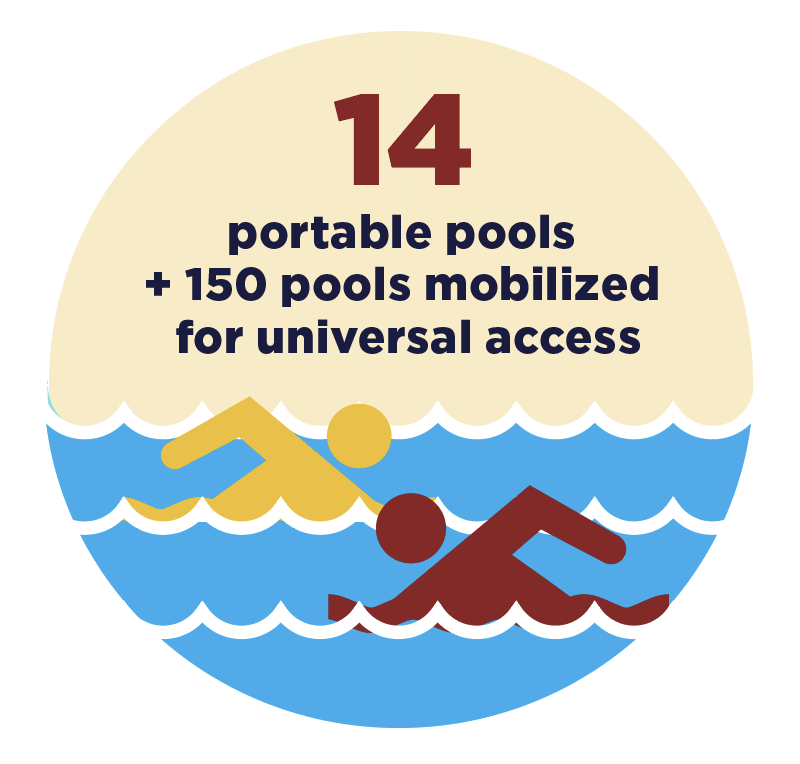
Recognizing infrastructure limitations as a fundamental barrier, GHAI established 14 strategically located portable swimming pools in low resource areas while simultaneously mobilizing 150 existing community and privately owned pools. This creative approach demonstrated to policymakers that quality swimming instruction could be accessible even where traditional facilities were scarce, supported by comprehensive pilot evidence and cost-benefit analyses that built confidence in scalable solutions.

In collaboration with Hanoi University of Public Health, GHAI built comprehensive monitoring and evaluation systems, including sophisticated online platforms and communication networks utilizing Zalo—Vietnam’s most widely used messaging platform. Our framework balanced rigorous accountability requirements with practical strengthened program quality while prioritizing child safety throughout the learning process.

Results

The program achieved both immediate life-saving impact and profound systemic transformation: 

A distinguishing feature of this initiative was GHAI’s innovative dual role as both direct implementor and technical assistance provider—a strategic approach that proved essential to the program’s success. This hands-on experience enabled GHAI to offer practical, contextually appropriate guidance informed by actual implementation challenges, from instructor recruitment to community engagement. It created powerful opportunities for embedded capacity building, where government counterparts worked alongside GHAI teams, gradually assuming greater responsibility.

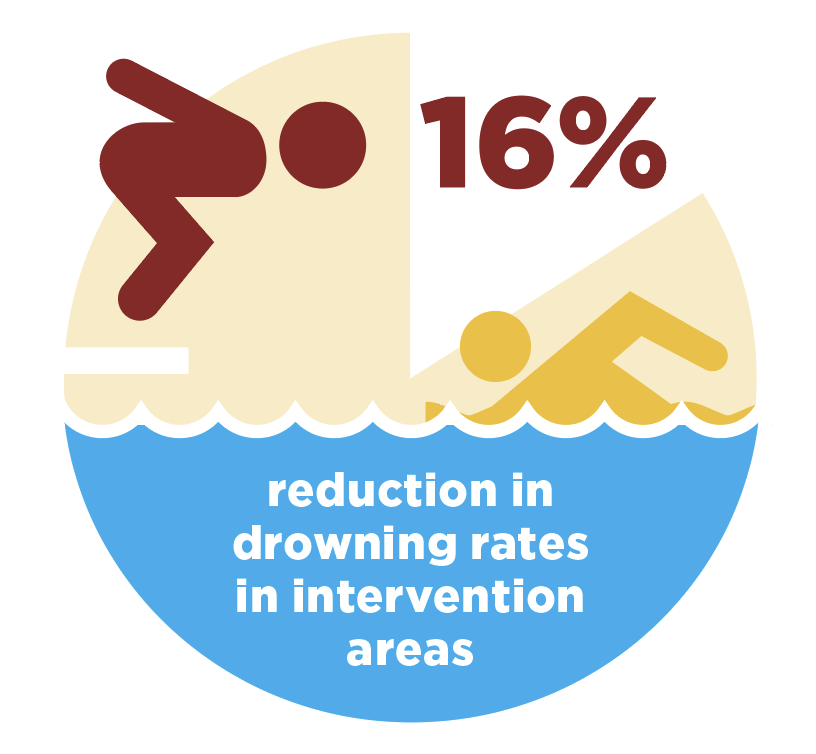
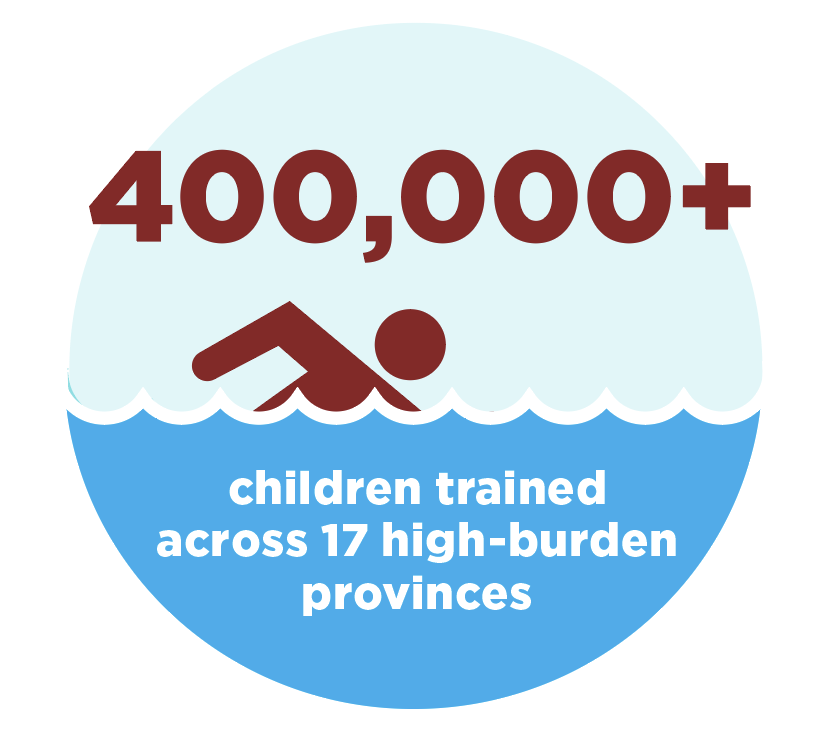
Implemented across 17 of Vietnam’s highest-burden provinces, the initiative trained over 400,000 children—75,000 through GHAI funding and 334,000 through local government co-funding, demonstrating strong national ownership. And over 52,000 children received training in water safety skills. Most significantly, intervention areas recorded a 16% reduction in child drowning rates, directly translating into hundreds of lives saved and thousands of families protected.

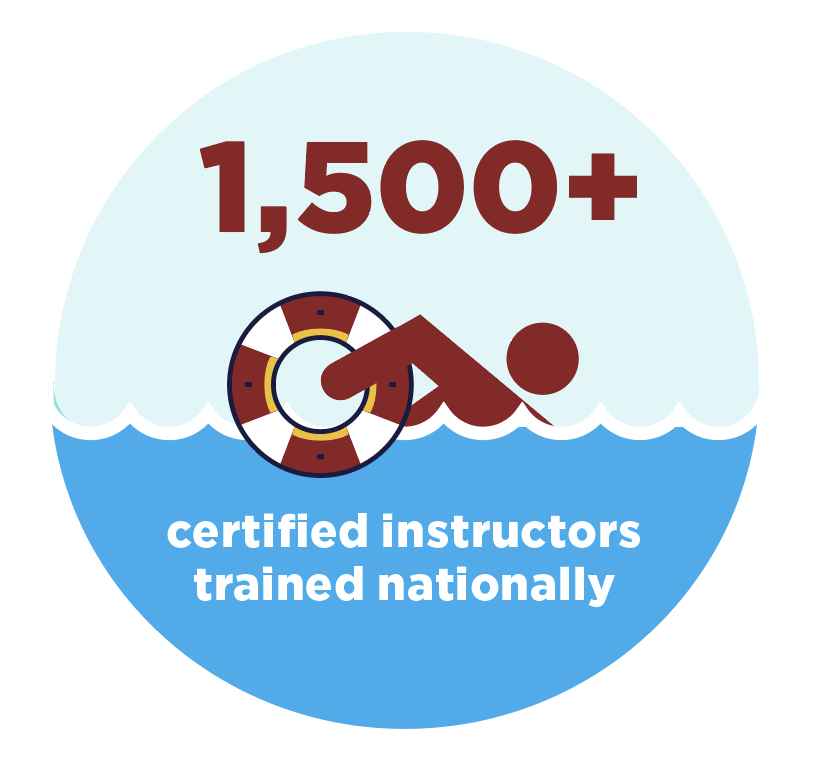
More than 1,500 nationally certified instructors now anchor local program delivery, enabling continued expansion without reliance on external assistance. The innovative combination of portable pools and mobilized existing facilities proved that survival swimming could effectively reach even the most resource constrained communities.

All participating provinces developed comprehensive action plans, and nationally adopted survival swimming guidelines are now standard practice within the education system throughout Vietnam. Survival swimming became a key criterion in the Prime Minister’s Action Plan on Child Injury Prevention (2021-2030). Most significantly, the government passed landmark legislation for students, a National Program on Strengthening Child Drowning Prevention in the Educational System (2025–2035) integrated survival swimming and water safety into school curricula, with Ministry of Education commitments creating robust institutional foundations for long-term sustainability.

Vietnam is now widely recognized as an exemplary model for drowning prevention in low-resource settings, demonstrating how coordinated multisectoral action, thoughtful local adaptation and strategic policy integration can drive transformative national-scale change in child safety outcomes.

Responsive Image

Lessons Learned

Concentrating resources on the highest-burden areas where children faced the greatest risk yielded highly visible results that unlocked significant political commitment and catalyzed local government financing while advancing critical equity objectives. 

Implementing evidence-based national standards that communities could thoughtfully adapt to local realities proved essential for ensuring both consistent program quality and authentic community ownership.

Leveraging existing local facilities, community partners, and indigenous expertise fostered authentic local ownership and operational continuity that persisted effectively as external support gradually phased out. 

Embedding survival swimming into comprehensive policy frameworks, government budgets and inter-agency coordination mechanisms from program inception ensured lasting impact that strengthened not only drowning prevention but also broader child protection and disaster management capabilities nationwide.

Robust real time monitoring and evaluation systems enhanced program quality, enabled rapid strategic adaptations and built essential credibility with stakeholders, securing sustained political commitment and continued investment. 

Responsive Image

Download a PDF version of this case study.