Case Study

How GHAI Helped Make Addiction Treatment More Accessible

The Mainstreaming Addiction Treatment Act (MAT Act) was signed into law in the final days of December 2022, eliminating a key barrier to access of a lifesaving medication for the more than 100,000 people dying of overdose per year. 

Responsive Image

Impact Statistics 

  • Increased House cosponsors from 117 in the 116th Congress to 250 in the 117th Congress, a 138% increase. 
  • Built bipartisan support, including 203 Democratic and 47 Republican cosponsors, reinforced bipartisan ownership by aligning messages and enabling shared credit across parties. 
  • Demonstrated broad geographic reach with cosponsors spanning 47 states plus the District of Columbia and Guam. 
  • Helped lead a coalition of more than 400 organizations supporting the policy behind the MAT Act. 
  • Sustained coordinated advocacy through COVID-19 era virtual engagement, enabling rapid national meeting volume and broader participation. 
  • Supported the final push that secured enactment through the Consolidated Appropriations Act, 2023 signed December 29, 2022, followed by federal guidance confirming waiver elimination and removal of related federal patient caps. 
  • Expanded the potential buprenorphine prescriber workforce from about 130,000 to about 1.8 million with waiver elimination. 
  • Positioned buprenorphine prescribing for opioid use disorder as standard practice under DEA registration, increasing the policy’s potential reach across a large registrant base. 
  • Helped elevate implementation clarity, with SAMHSA confirming waiver elimination and removal of waiver related federal patient caps. 

The Challenge 

Under the Drug Addiction Treatment Act of 2000, prescribing buprenorphine for opioid use disorder required a special federal waiver (waiver X). Prescribing opioids for pain did not. That asymmetry, additional registration, training requirements and paperwork, placed specifically on addiction treatment, defined the barrier advocates spent two decades trying to remove. 

In 2018, 40 percent of U.S. counties had no waivered buprenorphine provider, even as overdose deaths were climbing sharply. National drug overdose deaths rose from roughly 47,000 in 2014 to more than 80,000 by 2021, with synthetic opioids driving much of the increase. The supply of waivered prescribers never came close to matching this demand: as of 2021, fewer than 130,000 clinicians nationwide held the X waiver, concentrated heavily in urban areas and specialty practices. Rural communities and underserved neighborhoods bore the cost: longer travel distances, delayed care and more people funneled into crisis response rather than treatment. The Centers for Disease Control and Prevention (CDC) estimated that in 2022, only 25.1 percent of adults who needed medications for opioid use disorder (MOUD) received it. 

Congress debated reform for more than two decades. A House bill in the 116th Congress, H.R. 2482, drew 117 cosponsors but never advanced. By 2019, the policy solution was clear. The political infrastructure to enact it was not. 

GHAI’s Strategic Approach

The Global Health Advocacy Incubator’s (GHAI) Overdose Prevention Initiative played a central role in a national advocacy campaign in support of the MAT Act. The MAT Act was unlikely to pass as a standalone bill. GHAI’s role was to keep it attached to viable legislative vehicles as Congress shifted focus to other priorities. In June 2022, the House passed the Restoring Hope for Mental Health and Well Being Act, H.R. 7666, which included the MAT Act provision, a result of sustained bipartisan engagement and consistent committee work. GHAI maintained coalition alignment and conducted regular outreach to prevent the provision from being dropped during negotiations. 
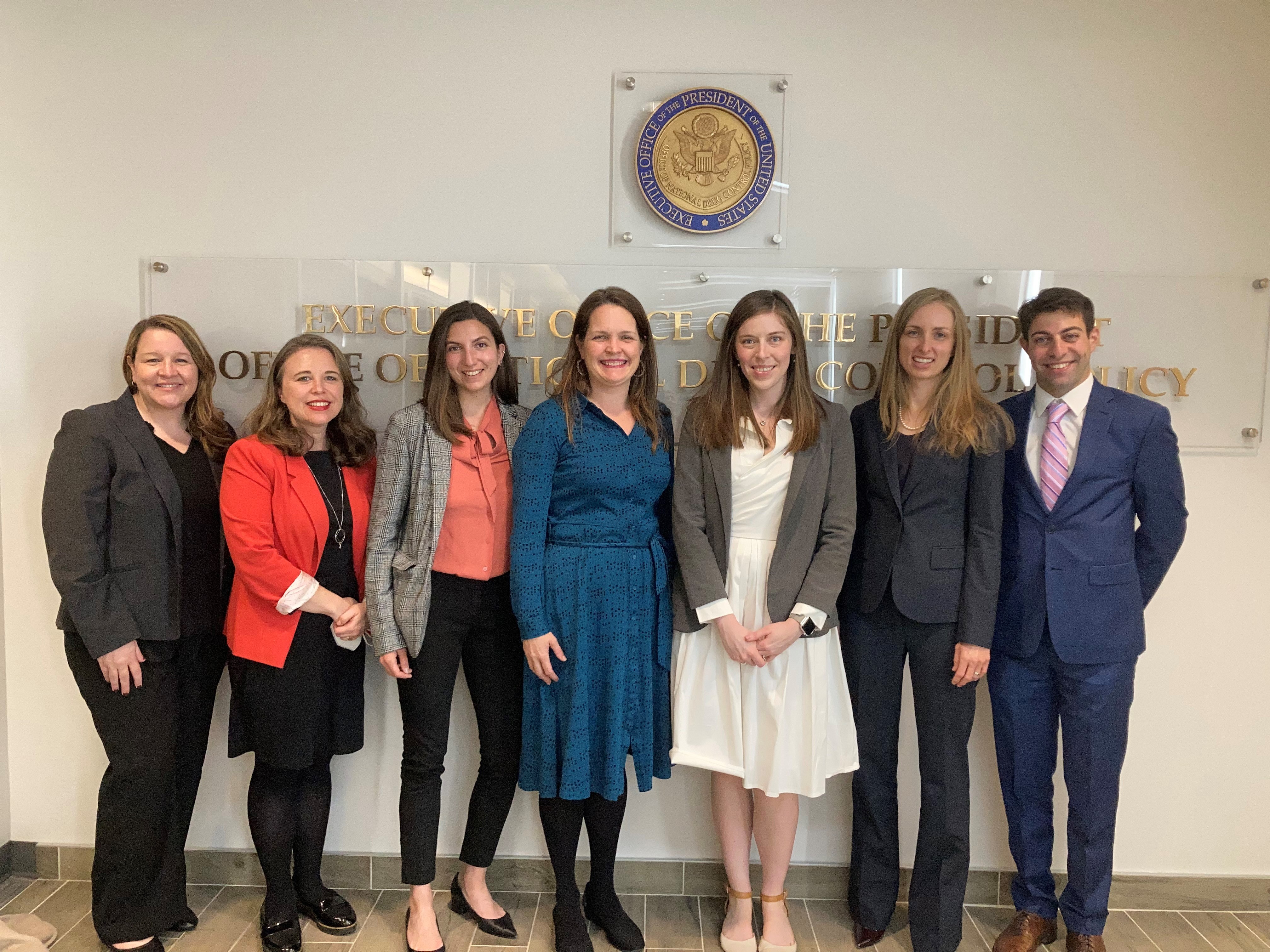
Members of the GHAI Overdose Prevention Initiative team meeting with officials at the Office of National Drug Control Policy (ONDCP). 

In January 2022, GHAI joined six other national organizations to form the MAT Act Coalition, representing more than 540 national, state and local groups that publicly endorsed the policy. Throughout 2022, the GHAI team held 123 meetings with congressional offices and developed social media toolkits, op-eds in national and local publications and direct outreach to both congressional leadership and White House officials. 

The results were measurable. The MAT Act gained cosponsors from more than 250 senators and representatives across both parties, more cosponsors than 99 percent of legislation introduced in the 117th Congress. and a 138 percent increase over the 116th. The bill was endorsed by the editorial boards of both the New York Times and the Washington Post

The most productive organizing phase coincided with COVID-19 era stay-at-home orders. GHAI treated the shift to virtual meetings as an opportunity. Without travel costs, scheduling constraints or geographic barriers, advocates from across the country could meet with congressional staff in a single day. That access enabled a stronger nationwide narrative and made it easier to pair constituent voices with targeted offices at scale. In this case, disruption created innovation and spurred collaboration.

As the final window approached, GHAI shifted from direct lobbying to strategic communications, activating partners to advocate publicly in news outlets and on social media while producing targeted materials for congressional leadership. The approach had two tracks: keeping the human stakes of the MAT Act visible and demonstrating the breadth of support behind it. 

GHAI coordinated a sign-on letter backed by more than 200 organizations, providing signees with a press release template and sample social media posts to amplify the effort. GHAI also led the development and pitching of four opinion pieces, including one by Congressman Mike Turner (R-OH), giving the campaign a Republican voice at a critical moment. The remaining pieces came from providers in Utah, Louisiana and Maine, chosen to reach senators and representatives through the local outlets those offices follow. 

By late 2022, congressional leaders were assembling the year-end spending package. Many provisions compete for space in those packages; policies without organized pressure can disappear without explanation. GHAI coordinated targeted outreach to key decision-makers, reinforced bipartisan support and responded quickly to implementation questions, positioning the MAT Act as fully vetted, broadly backed and ready for enactment. 

View MAT Act Policy Timeline and Advocacy Leverage Points

Victory! 

President Biden signed the Consolidated Appropriations Act, 2023 into law on December 29, 2022. Included was the MAT Act provision which eliminated the federal X waiver requirement for buprenorphine prescribing for opioid use disorder. 

Federal implementation followed quickly. The Drug Enforcement Administration (DEA) confirmed that clinicians no longer needed a DATA waiver (or X-waiver) registration and that prescriptions required only a standard DEA registration number. The DEA and the Substance Abuse and Mental Health Services Administration (SAMHSA) also confirmed the removal of federal patient caps tied to the waiver. In his 2023 State of the Union address, President Biden named the reform as part of a bipartisan “unity agenda.” GHAI, members of Congress and coalition partners joined a White House event in January 2023 to mark the end of the X waiver barrier. 

Following passage, the eligible prescriber workforce grew from roughly 130,000 to approximately 1.8 million. Buprenorphine prescribing for opioid use disorder is now standard practice under a standard DEA registration, the same credential clinicians already hold. 

I’ve fought for years to get buprenorphine into mainstream medicine, and I can tell you firsthand that GHAI was an indispensable partner — their ability to mobilize a coalition of this scale, sustain pressure through a brutally narrow legislative window and keep bipartisan support locked in when it mattered most made a real difference. When President Biden signed the MAT Act into law, it was a watershed moment for addiction treatment in America, and I’m grateful GHAI was in the trenches with us to see it across the finish line.

— Congressman Paul Tonko (D-NY-20), a lead champion of the legislation

Lessons Learned 

  • Measurable support moves bills. Cosponsors, committee engagement and geographic breadth create leverage when leadership decides what makes the final package. Narrative support alone does not. 
  • Disruption can lead to innovation. Virtual advocacy during COVID-19 expanded engagement rather than merely preserving it. Removing participation barriers improved national coordination. 
  • Cross-sector validators reduce perceived risk. Diverse, bipartisan messengers give offices permission to act, not just reason to agree. 
  • Year-end negotiations reward “ready now” policy. Advocates who answer implementation questions quickly and show broad backing hold their ground. Unresolved questions do not. 
  • Bipartisan support requires more than bipartisan rhetoric. Advocacy must validate through materials, messengers and sustained follow-up, not just talking points


Download PDF Version of this Case Study