From Budget Cut to Budget Increase: Building Political Will for Civil Registration in Zambia
In Zambia, the national government increased funding for its civil registration services by 67%, following advocacy by the Global Health Advocacy Incubator (GHAI) and our civil society organization (CSO) partner Maternal Health Action Zambia (MHAZ). Prior to civil society engagement, the initial budget proposal had called for a funding cut.
This means more births and deaths will be registered, more Zambians will be able to enjoy their civil rights and access social services and the country will have a more secure legal identity system.
Responsive Image
The Challenge
A baby's arrival should mark the beginning of their legal identity with a birth certificate that will one day unlock opportunities for education, healthcare and citizenship. But in Zambia, just 22% of children under five have their births registered, and only 15% in rural areas – one of the lowest registration rates in the world. Without birth registration, these children are invisible to the government systems meant to protect and serve them and they are excluded from the national statistics used for planning purposes.
Death registration in Zambia, likewise, remains significantly low at 28%, even though registration is critical for the country’s vital statistics, which relies on civil registration records to generate population and health data for the governments’ planning and resource allocation. Cause of death information is especially important for public health planning.
The government of Zambia has prioritized national ID cards, which to be optimally effective requires a more robust system for birth and death registrations. People without a birth certificate could obtain ID cards using self-asserted affidavits or immunization cards as evidence. This made the system more vulnerable to fraud, duplication and mistakes. As Zambia prepares to digitize their ID card system, GHAI argued that Zambia's digital ID reforms be built on a foundation of universal birth registration and a strengthened civil registration system to ensure security, inclusivity and effectiveness.
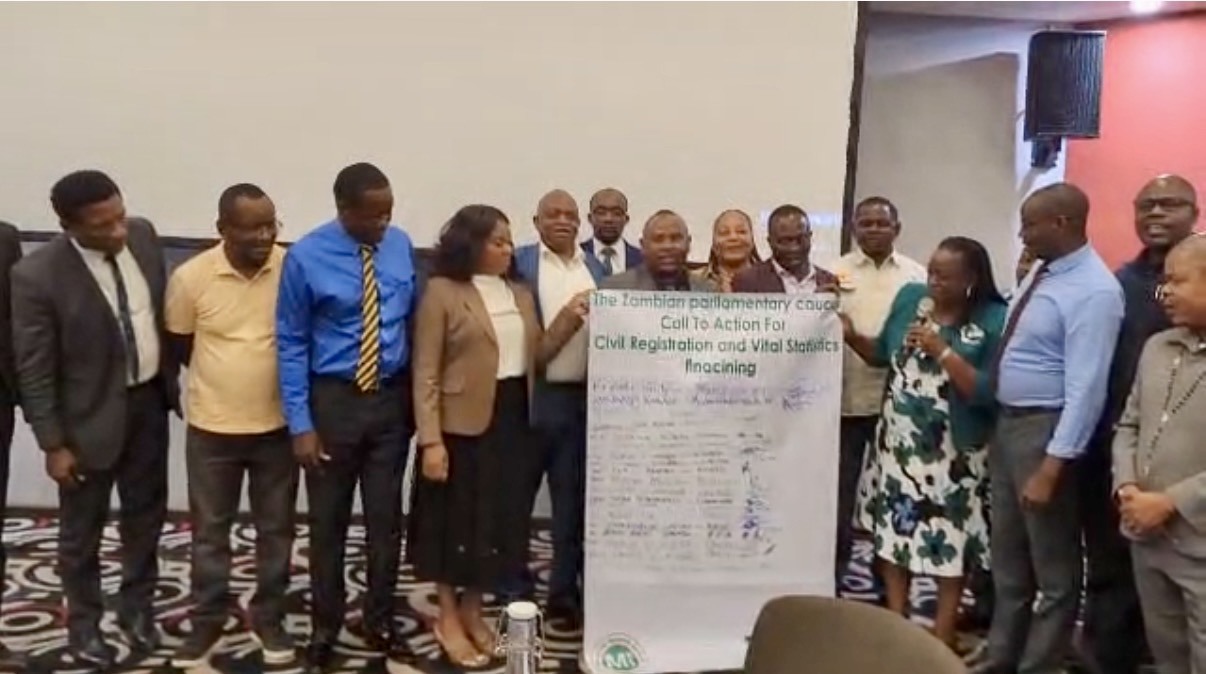
As a result of the advocacy campaign, 26 Members of Parliament established a Parliamentary Caucus on CRVS October 2025.
GHAI's Role
When Zambia's Ministry of Home Affairs released its draft 2026 budget in late 2025, civil society advocates from MHAZ, supported by GHAI, spotted a troubling line item: funding for civil registration services, already low, was set to be even further reduced.
MHAZ and GHAI responded rapidly with an evidence-driven budget advocacy strategy that was anchored in four pillars:
GHAI, MHAZ and the Department of National Registration, Passport and Citizenship (DNRPC) jointly conducted a gap analysis of the national civil registration and vital statistics (CRVS) system to identify operational and financing constraints. The analysis found that the budget allocation for civil registration fell short of the National Strategic Plan's requirements by 82% (Z$111.6 million, about $5.8 million in 2025). This analysis provided a credible and government-owned evidence base for the advocacy campaign.
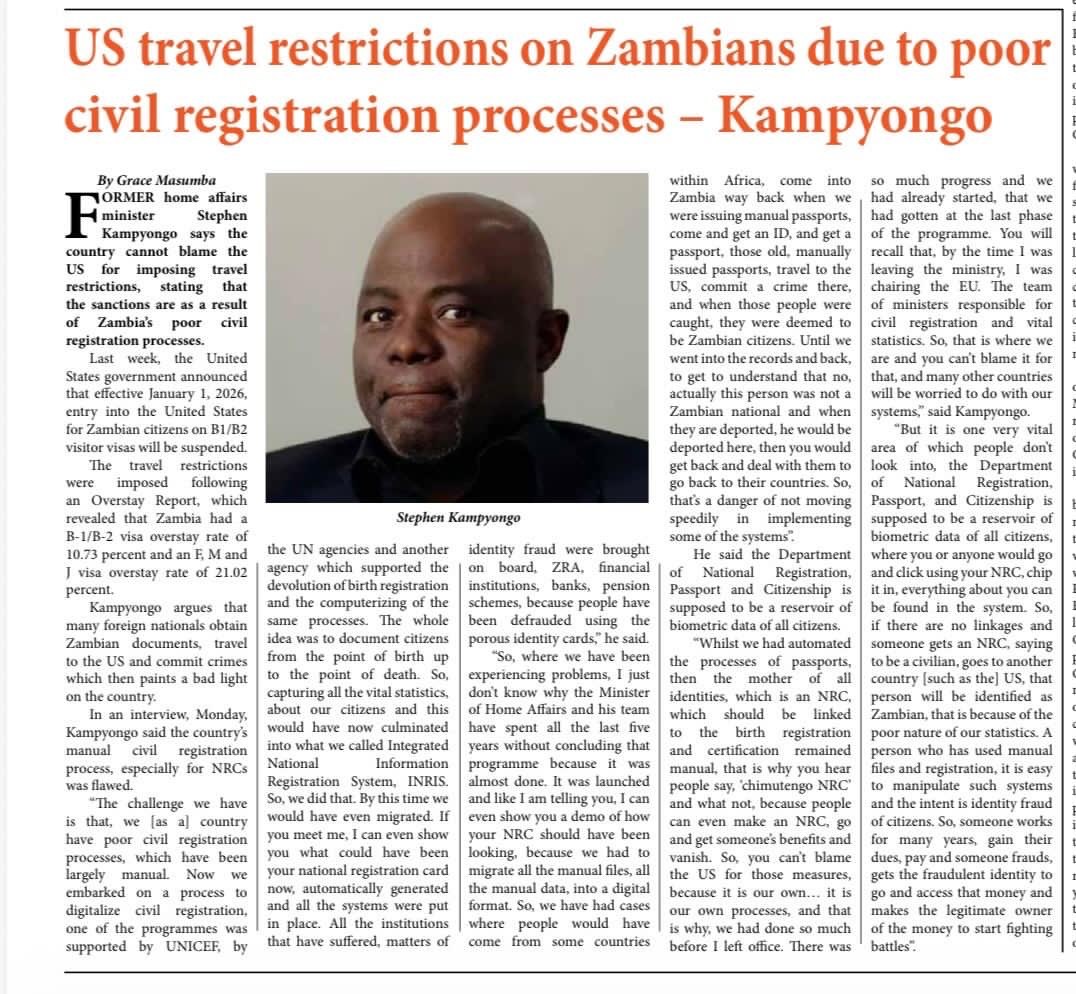
Recognizing the need for a compelling policy narrative that would move the stakeholders to action, GHAI supported MHAZ to position CRVS as a solution to several national security issues Zambia was facing. This framing was chosen because national security issues due to lack of registration were in Zambian news and public discourse. For example, Zambians were facing travel restrictions to the United States due to “poor civil registration processes.” Our narrative offered a solution to this problem: strong CRVS systems lead to more secure legal identity systems. This resonated strongly with senior policymakers and security sector stakeholders. Hon. Brig. General Morgan Sitwala (RTD), MP, Chairperson of the Parliamentary Committee on National Security and Foreign Affairs, explained: “You cannot secure a population you cannot identify.”
GHAI and MHAZ organized a joint media and multi-stakeholder convening in May 2025, bringing together line ministries, parliamentarians, CSOs and journalists. As a result of increased awareness and demand for deeper engagement on CRVS, parliamentarians in attendance agreed to establish a Parliamentary Caucus on CRVS to coordinate learning, budget advocacy and policy dialogue. In October 2025, the CRVS Caucus was formally launched with 26 members of parliament. GHAI provided technical support to formalize the caucus, including supporting the drafting of its Terms of Reference and clarifying its mandate.
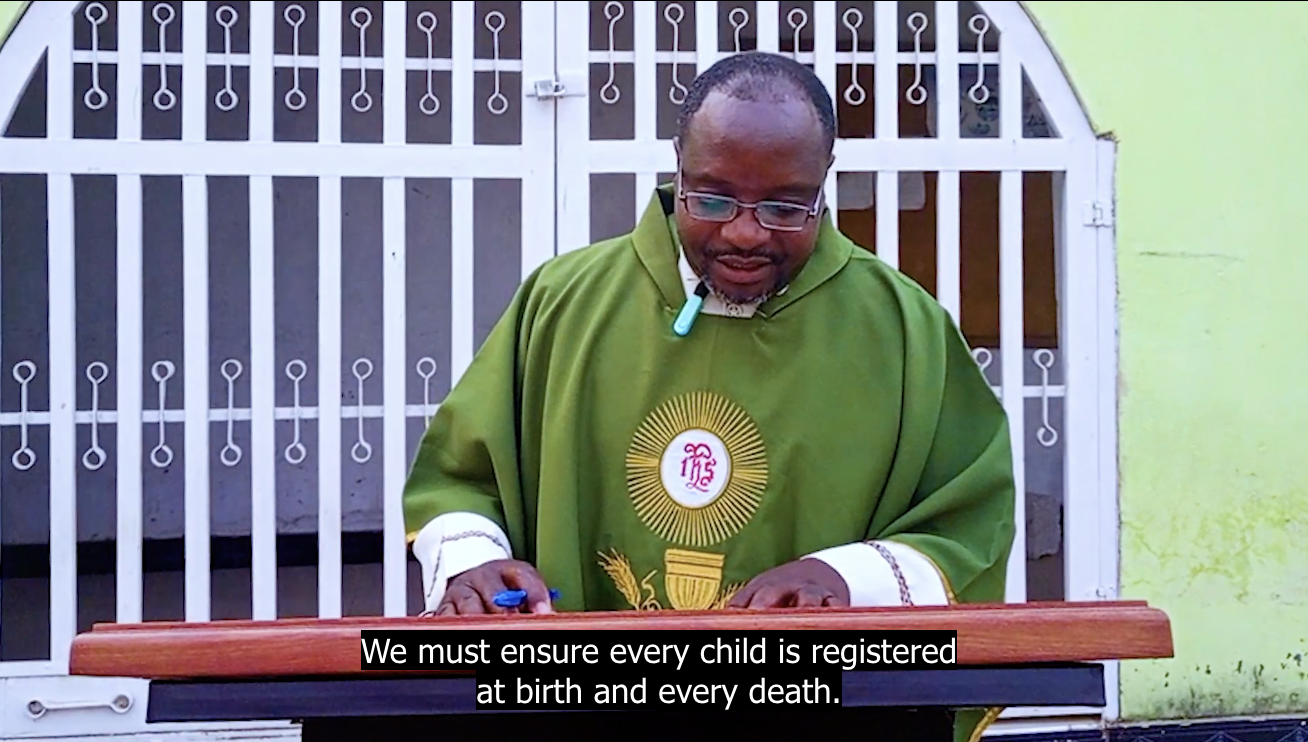
Journalists were part of the caucus as stakeholders, which resulted in strong media advocacy partners and the production of articles and radio programs that linked CRVS to national security and development. Policymakers and journalists called MHAZ after reading the op-eds and listening to the radio shows and asked how they could move this forward. Traditional and religious leaders were engaged as trusted community messengers, and advocacy activities were integrated into a major traditional ceremony, generating public demand for birth certificates and legal identity through community mobilization and human-interest storytelling.
Results
Following this advocacy campaign, the Budget Committee of the National Assembly adopted the campaign’s recommendations and reversed its initial decision to cut funding for civil registration services in the 2026 national budget. Instead, the committee increased the funding by 67%. Additionally, a Notice of Amendments was issued to the Ministry of Finance and the Ministry of Home Affairs and Internal Security, implementing the funding increase and influencing civil registration services priorities within the 2026 national budget.
This Parliamentary Caucus on CRVS is not just another group; it’s a vital legislative force for national development, security and the protection of citizens' fundamental rights.
— Hon. Cliff Mpundu, MP, Member of the Parliamentary Caucus on CRVS
Traditional and religious leaders, such as Rev. Fr. James Bwalya, were engaged as trusted community messengers.
Lessons Learned
Building Credibility: Advocates built their credibility with decision-makers in multiple ways, including by using technical evidence, coalition pressure, strategic messaging, engaging journalists as trusted partners and training partners in budget literacy.
Building Political Will: The positioning of the CRVS program as vital for national planning and development, rather than a merely legal obligation, significantly boosted Members of Parliaments’ political will.
Cultivating political champions: The launch of the Parliamentary Caucus improved oversight and ensured that the CRVS program remained visible during budget discussions.
Engage Early in the Budget Cycle: Early outreach led to greater influence, making it easier for advocates to understand the budget cycle and identify key entry points, such as when the budget call circular was presented by the Ministry of Finance and during budget hearings.
Community-Level Advocacy: Partnering with community leaders brought campaign messages to traditional and cultural events, elevated public awareness and enhanced public pressure on decision-makers.